
For the discerning drinker like you, it’s clear that the world of wine is more than just a simple sip. Your ability to distinguish the myriad flavors, scents, and unique characteristics in each glass is truly admirable, often leading you towards wines with a certain complexity and a superior balance. It’s the abundance of flavors and subtleties you crave, wanting them to unfurl on your tongue without any single aspect – be it taste, alcohol, or acidity – stealing the spotlight.
However, contrary to the notion that your heightened sensitivity to flavours might push you towards robust tannin-rich wines, the truth is somewhat different. As a sensitive wine drinker, you tend to navigate towards the more delicate, lighter-bodied wines with modest tannin content. Your generous allocation of taste buds often makes you more attuned to the bitter notes that come with higher tannin levels. Therefore, a more delicate wine caters to your refined palate, providing an intricate balance that suits your discerning taste.
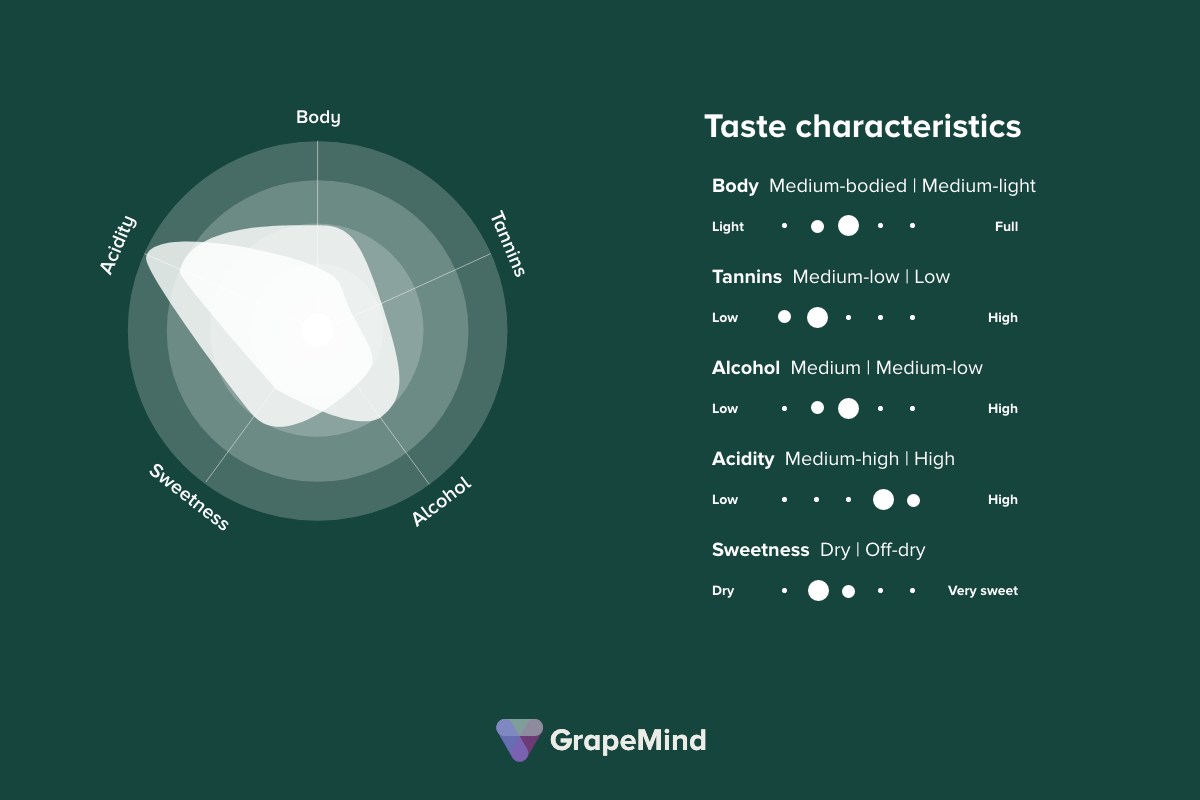
Grape suggestions
Allow us to suggest a handful of grape varieties known for producing wines that beautifully balance body and texture, with a subtle presence of tannins and alcohol.

These grapes unite under a common characteristic – they offer a drinking experience that avoids extremes, neither veering towards overly light nor excessively heavy on the palate, while consistently maintaining a low tannin profile.
The final expression of a wine is a testament to the growing region of the grapes, the local climate, and, of course, the winemaking techniques employed. As an illustration, a Pinot Noir from Burgundy in France is going to exhibit a different taste profile from a Pinot Noir produced in Germany (where it’s referred to as Spätburgunder).
If you’re a sensitive wine drinker with a penchant for white wines, you might find delight in the crisp and refreshing character of Pinot Gris, the balance of acidity and fruitiness found in Albariño, or the combination of minerality and citrus flavours in Grüner Veltliner. Turning to the world of red wines, Pinot Noir and Gamay present a light and nuanced flavour profile, whereas Barbera offers a more generous-bodied wine experience, albeit with restrained tannins.
Sensitives, wine traits & grapes

Body
In the realm of wine, ‘body’ is a term indicating the heaviness or robustness of a wine as it graces the palate, a sensation closely tied to the alcohol content and the perceived richness or viscosity of the wine. Sensitives, possessing a more refined palate, typically gravitate towards medium-bodied wines that deliver a more sophisticated texture. The delicate dance between body and texture is key, shaping a nuanced and intricate tasting journey savored by Sensitives. Light to medium-bodied red wines like Pinot Noir or Gamay, and white wines like Sauvignon Blanc or Riesling, known for their subtle textures, are often a hit with Sensitives, presenting a body that is solid without being overly hefty or thick.
Tannins
In terms of tannins, Sensitives, with their heightened ability to detect flavours and textures, may not necessarily favour wines with high tannin content. Tannins are naturally occurring compounds that exist primarily in the skins, seeds, and stems of grapes. They are released into the wine during the winemaking process, particularly during fermentation and ageing, especially if the wine is aged in wood. Tannins contribute to the taste, colour, and texture of the wine, often imparting a bitterness or astringency that can be perceived as a drying sensation in the mouth.
Because Sensitives have more taste buds and are thus more sensitive to the bitter flavours commonly associated with high tannin levels, they tend to gravitate towards lighter, more delicate wines with low tannins. Red wines such as Pinot Noir, Valpolicella (blend), or Carignan are often preferred by Sensitives. These grapes strike a balance between flavour and texture, providing a nuanced and enjoyable experience that caters to their elevated sense of taste.
Alcohol
When it comes to alcohol content, Sensitives often seek wines with balanced alcohol levels, as excessive alcohol content can overpower the wine’s other flavours and aromas. Alcohol in wines is produced through the fermentation process, where yeast converts sugar present in the grape juice into ethanol (alcohol) and carbon dioxide. The alcohol content is expressed as a percentage of the wine’s volume.
Sensitives, with their heightened ability to discern flavours and aromas, tend to gravitate towards wines with moderate alcohol content, often falling within the medium bracket (11.5% to 13.5%). Wines like Pinot Noir or Carignan for red wine, which usually fall into the medium alcohol bracket, and Riesling or Sauvignon Blanc for white wine, often in the medium-low to medium range, are good options for those Sensitives seeking a harmonious balance of alcohol content, flavor, and aroma.
Acidity
In terms of acidity, Sensitives often seek wines with balanced acidity, as it contributes significantly to the wine’s overall flavour profile. Acidity in wine refers to the fresh, tart, and sour attributes of the wine. Primary natural acids found in wine are tartaric, malic, and, to lesser extents, citric and lactic acids. These acids are naturally present in grapes and play a key role in the taste of the wine, providing balance to its sweetness and enhancing its overall flavour profile.
Acidity can be felt in the mouth as a tingling sensation on the sides of the tongue and a mouthwatering effect. It’s a crucial element that helps balance the sweetness, bitterness, or tannic attributes of a wine, making it more rounded and palatable.
Sensitives, with their heightened ability to discern flavours and aromas, tend to enjoy wines with a well-balanced acidity, neither too high nor too low. Wines such as Sauvignon Blanc or Riesling for white wine, and Pinot Noir or Barbera for red wine, often provide an acidity level that complements the other flavours of the wine, resulting in a balanced and enjoyable drinking experience.
Sweetness
Sweetness in wine is primarily derived from the residual sugar that remains after the fermentation process. During fermentation, yeast consumes the grape’s natural sugars and converts them into alcohol. If the fermentation process is stopped early, or if the grapes are especially high in sugar, some residual sugar remains, giving the wine its sweetness. Sweetness can play a crucial role in balancing a wine’s acidity, bitterness, or tannins, making it feel more rounded and palatable.
Sweetness can also enhance the overall body and texture of the wine, creating a richer and fuller mouthfeel. For Sensitives, with their heightened ability to discern tastes and flavours, sweetness needs to be well balanced. They might not necessarily favour wines that are overly sweet but will appreciate wines where the sweetness is well-integrated and complements the other characteristics of the wine.
Sensitives tend to enjoy wines that range from dry to off-dry, and even some sweeter wines, as long as the sweetness doesn’t dominate the other flavours. They might enjoy wines like Riesling, which can range from dry to sweet but is always balanced by high acidity, or Pinot Noir, a red wine that can express subtle fruit sweetness while remaining dry.
Are you Tolerant, Perceptive or Sensitive?
 GrapeMind