
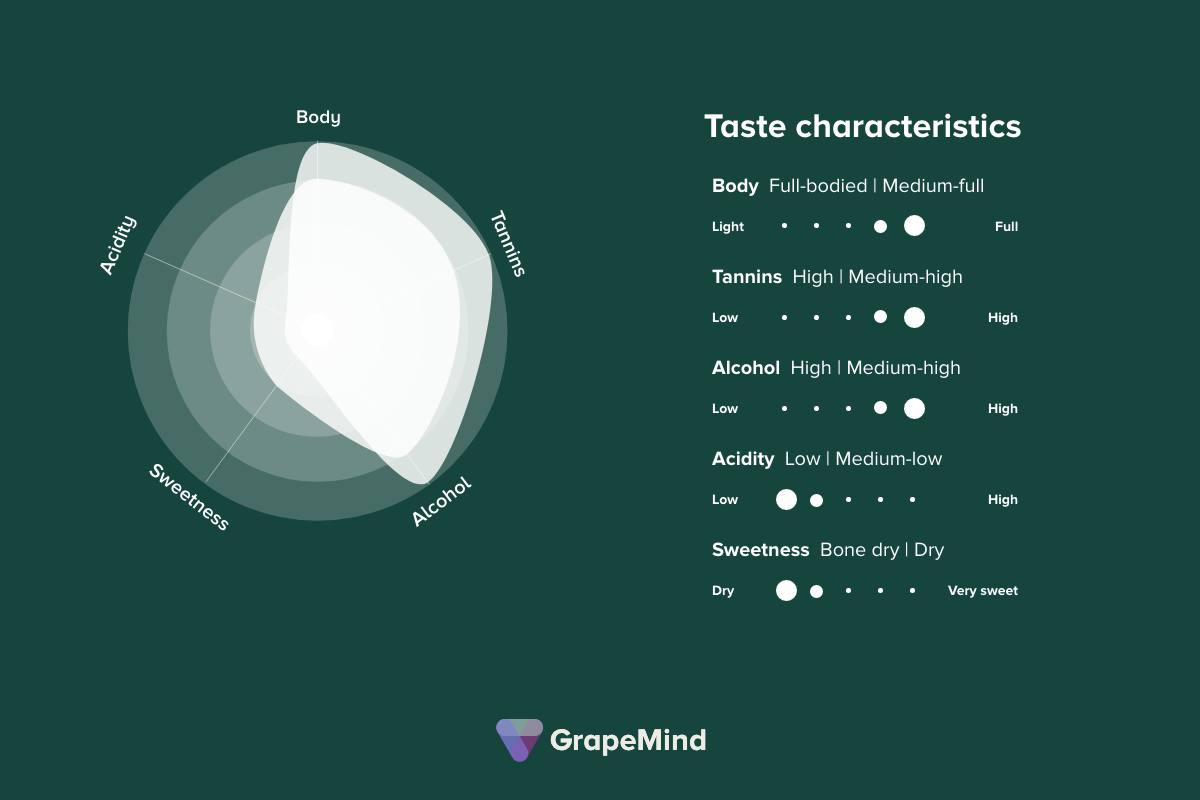
As a tolerant wine drinker, your palate is inclined towards wines that deliver a profoundly engaging drinking journey, marked by a more vivacious taste and a daring mouthfeel. You generally favour wines that boast a robust demeanour in terms of flavour and alcohol, and those possessing a pronounced level of tannins – characteristics frequently associated with wines matured in oak.
It’s worth mentioning, one of the most recognised individuals who shares your ‘tolerant’ wine profile is none other than the esteemed wine critic, Robert Parker. Much like you, he appreciates a full-bodied, bold wine that leaves a lasting impression.
Grape suggestions
Allow us to present a selection of grape varieties typically associated with a bolder mouthfeel and often noted for reaching higher levels of alcohol.
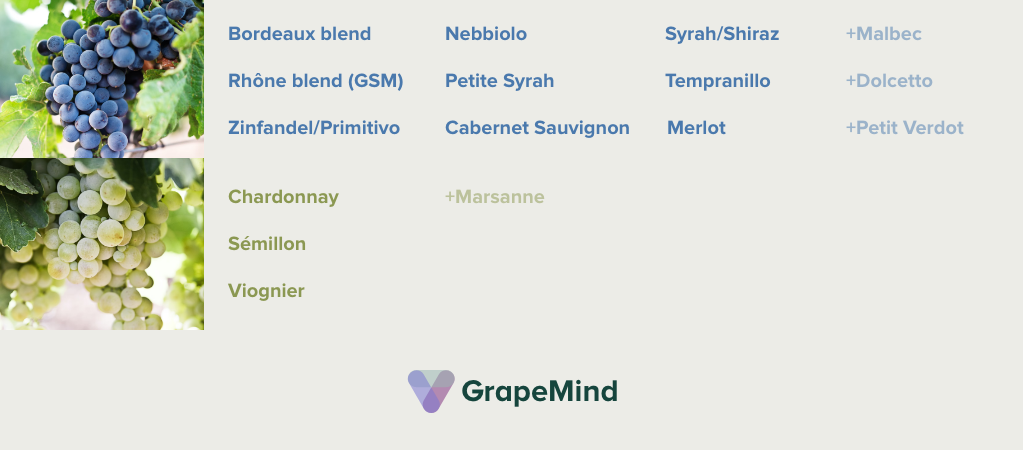
Many wines are an artful blend of different grapes, but we recommend seeking out wines from Bordeaux in France, or perhaps Barolo and Barbaresco that come from the Nebbiolo grape of Northern Italy. From Southern Italy, the Primitivo grape from Puglia is a good option, as are Tempranillo-based wines from Rioja or Ribera del Duero in Spain. Petite Syrah from the USA and Malbec from Argentina also make excellent choices for those seeking a more intense taste experience.
Turning to white wines, Sémillion from Bordeaux in France, oaky Chardonnays from Burgundy in France, and Viognier from Rhône in France could pique your interest. Each of these options is known for their unique profiles that blend body, robustness, and high alcohol content, creating a wine experience that’s engaging, immersive, and, indeed, quite unforgettable.
Remember though, the final taste of a wine is a delightful cocktail of the grape’s growing location, local climate, and undoubtedly, the winemaking process. This means a Cabernet Sauvignon from Bordeaux in France will offer a markedly different taste from its counterpart in California.
Tolerants, wine traits & grapes

Body
In the language of wine, the term ‘body’ captures the weight or fullness of the wine on your palate, closely linked to the wine’s alcohol content and its perceived richness or viscosity. As a Tolerant wine drinker, with a less sensitive palate, you might find yourself drawn towards fuller-bodied wines. The heightened weight and texture of these wines can provide a fulfilling experience, particularly when nuanced flavours might not be as perceptible to you.
Grape varieties such as Bordeaux blends (including Cabernet Sauvignon, Cabernet Franc, Merlot) for red wine, and Chardonnay, Viognier, and Sémillon for white wine, offer a potent interplay between flavour and alcohol content. This harmony gives rise to a fuller body, yielding a more palpable taste and texture, a sensation often appealing to Tolerants. A case in point is oak-aged Chardonnay, often a hit with Tolerants due to its rich, full-bodied nature.
Tannins
When we talk about tannins, Tolerants like you may find the distinct texture and mouthfeel that higher tannin levels impart, quite enticing. Tannins, originating from the oak ageing process and the skins, seeds, and stems of grapes, contribute significantly to the wine’s overall body and texture. However, keeping in mind that most other taste profiles might find tannin-heavy wines somewhat overpowering and bitter, it’s worthwhile considering this when choosing wines for communal events. Red wines such as Bordeaux blends (Cabernet Sauvignon, Merlot, Cabernet Franc), Nebbiolo, and Syrah/Shiraz are high in tannins.
For white wines, Tolerants may appreciate orange wines, often higher in tannins due to their production process, or other tannin-rich contenders like oak-aged Chardonnay, Sémillon, and Viognier.
Alcohol
As a Tolerant, you’re not as sensitive to high alcohol levels (+15%) in wines as other groups might be. While some individuals find high alcohol content intensifies the bitter sensation of a wine, others believe it enriches the overall sensory experience.
Alcohol in wines comes into play during the fermentation process when yeast transforms the sugar present in grape juice into alcohol (ethanol) and carbon dioxide. The alcohol content is then stated as a percentage of the wine’s volume.
Acidity
Lastly, acidity can sway the perceived body and sweetness of a wine. Wines with a lower acidity often taste fuller-bodied and sweeter, whereas higher acidity bestows a lighter touch to wines, which can also be perceived as sour or tart. For Tolerants, wines with lower acidity may proffer a more pleasing flavour journey.
Acidity manifests itself in the mouth as a tingling sensation on the sides of the tongue and a mouthwatering effect. It plays a crucial role in balancing out the sweetness, bitterness, or tannic attributes of a wine, rendering it more rounded and agreeable.
Sweetness
The sweetness in wine primarily arises from the residual sugar left behind after the fermentation process. During fermentation, yeast devours the grape’s natural sugars, converting them into alcohol. If fermentation is halted early, or if the grapes are particularly sugar-rich, some residual sugar remains, lending the wine its sweetness. Sweetness can significantly impact balancing a wine’s acidity, bitterness, or tannins, making it feel more rounded and palatable. It can also contribute to the overall body and texture of the wine, creating a richer and fuller mouthfeel.
When it comes to sweetness, Tolerant drinkers like you may enjoy a spectrum of wines, including those with a higher degree of sweetness. These drinkers may appreciate wines spanning from dry to sweet, as they are less sensitive to sweetness masking other flavors.
However, balance is always appreciated, and wines where the sweetness complements and enhances the other wine characteristics are often enjoyed.
Are you Tolerant, Perceptive or Sensitive?
 GrapeMind