
Whether you’re a casual wine enthusiast or someone just beginning to explore the world of wines, the Wine Taste profiles could be your gateway into understanding what you like. They’re here to help you figure out what tickles your taste buds in just the right way.
The Wine Taste profiles shine a light on five important traits you should watch for when picking your next bottle: Body, Tannins, Alcohol, Acidity, and Sweetness. We’ve done our homework, conducted tests, and linked these traits to different levels of taste sensitivity and, well, grapes. This way, you can get a feel for what you might enjoy, and what you should buy, based on your unique taste buds.
Now, if you’re already a wine connoisseur, master sommelier, or just plain wine-obsessed, the Wine Taste profiles might not be your cup of tea… or, well, glass of wine. They’re all about taste sensitivity and don’t take into account (at least not yet) those refined tastes and preferences you’ve spent years cultivating.
Ready to demystify wine traits?
Our Wine Taste Card is here to help. It simplifies five key wine traits and guides you towards the intensity level that’s likely to make your taste buds do a happy dance.
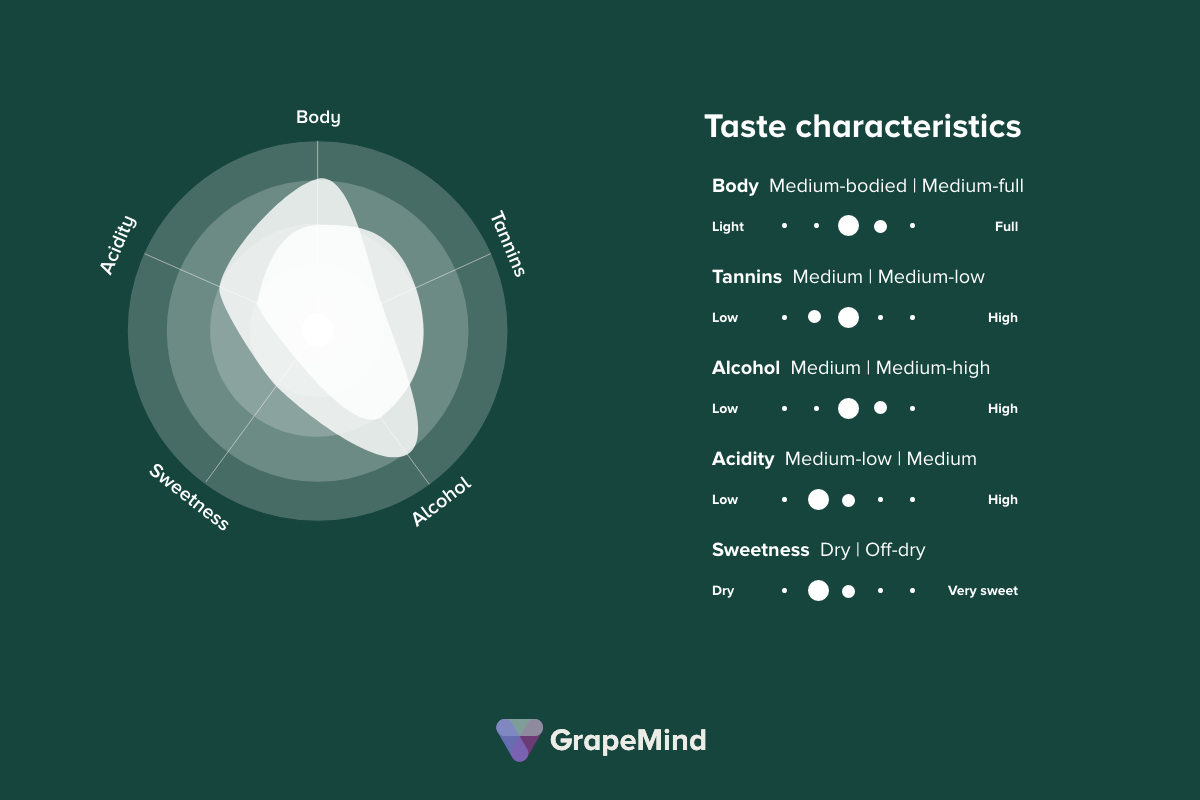
Let’s take “Body” as an example. This trait talks about a wine’s overall weight, texture, and fullness. It can swing from “Light-bodied” to “Full-bodied”. So if your taste buds aren’t easily tickled, you might enjoy a powerful, full-bodied wine that brings all the drama. But if you’re super sensitive to taste, you might fall head over heels for lighter wines. These tend to be more delicate and won’t feel like they’re doing a heavyweight boxing match on your palate.
Our radar chart is a simple visual that shows the range you should aim for. And the scale chart? It explains how these traits are measured, plus the level recommended for your unique taste sensitivity profile. Yup, you caught us, they both show the same thing. But hey, who doesn’t love a good looking chart?
And there’s more! Below the Wine Taste card, we’ve done a little matchmaking for you. We’ve found which grapes tend to produce wines with similar characteristics. It looks a little something like this:

Blue for red wines, and green for white wines (we’ve followed the grape colours).
Decoding the wine characteristics
Body
Think of the body of a wine as its personality – the overall weight, texture, and fullness that it flaunts when you take a sip. It’s often dictated by the alcohol content and swings from light to full-bodied. Picture a lightweight, agile ballet dancer versus a heavy, sumo wrestler. A lighter-bodied wine feels more like a gentle waltz on your palate, while a full-bodied wine dances a powerful tango.
Tannins
Tannins are like the spine of the wine, giving it structure, astringency, and sometimes a touch of bitterness. They’re found in the skins, seeds, and stems of grapes, and also in the oak barrels some wines age in. Tannins can leave a dry sensation in your mouth, impacting the overall balance and mouthfeel of the wine. They’re a bit like a strong character in a movie that you can’t ignore.
Alcohol
Alcohol sneaks into the wine during the fermentation process, when yeast turns sugar in the grape juice into alcohol and carbon dioxide. The alcohol content of a wine tweaks its body, mouthfeel, and warmth. Higher alcohol content can create a warm, or even fiery, sensation, while a lower one makes the wine feel more like a cool, refreshing breeze.
Just for fun, here’s how alcohol levels typically pan out in wine:
- Low: 5-10%
- Medium-low: 10% to 11.5%
- Medium: 11.5% to 13.5%
- Medium-high: 13.5% to 15%
- High: above 15%
Acidity
When life gives you grapes, check for acidity. Grapes naturally come packed with tartaric, malic, citric and lactic acids. Acidity brings that lovely fresh, tart vibe and helps keep the wine balanced. A more acidic wine has that crisp, mouthwatering feel, while a lower-acidity wine may feel more laid back and mellow.
For the nerds out there, here’s a mini deep-dive into the acids in your wine:
- Tartaric Acid: The main acid in grapes and wine, tartaric acid is like a puppet master, guiding the chemical reactions during winemaking.
- Malic Acid: Known for its green apple-like flavour, this acid is a natural part of grapes and many other fruits. Winemakers can soften a wine’s acidity by converting malic acid into lactic acid in a process known as malolactic fermentation.
- Citric Acid: Citric acid often plays a supporting role in wines, boosting total acidity or preserving the wine. It’s like a squeeze of lemon on your favorite dish – sharp and invigorating.
- Lactic Acid: Not common in grapes, but born in wine during malolactic fermentation. This process swaps malic acid for smoother lactic acid, making the wine creamier and less tart. It’s a popular move when making some types of red wines, as well as certain whites and sparklers.
Sweetness
The sweetness in wine is all about the sugar left standing after the fermentation party’s over. The sweetness level can go from dry (where sweetness is a no-show) to sweet, and it plays a vital role in balancing a wine’s acidity, bitterness, or tannins. A sweeter wine can come off as more rounded and pleasing, while a drier wine might highlight other flavors.
Finding the right bottle: Flavours & Aromas
Biology might have a say in how you experience wine, but let’s face it, it’s the tastes, flavours and aromas that get you to fall head over heels for a bottle. Since taste preferences are a very personal affair, they can’t be measured with a test. But don’t worry, here’s a mini guide to some of the usual suspects in flavours and aromas to keep an eye out for (that is, until we release GrapeMind).
Fruity
When a wine is tagged as ‘fruity,’ it’s hinting at flavours and aromas that remind you of different types of fruit. Picture red wines dishing up notes of red fruit (like a bowl of cherries, strawberries, or raspberries), dark fruit (like blackberries, blueberries, or plums), or even dried fruit.
As for white wines, they’re often seen partying with flavours of citrus fruits (think lemon or grapefruit), stone fruits (like peaches or apricots), or tropical fruits (like pineapple or mango).
Leathery
If a red wine is said to be ‘leathery,’ it means it carries a complex, savoury aroma that’s somewhat like leather. It’s a trait you’ll usually find in mature, full-bodied red wines that have spent a fair bit of time ageing, especially in oak barrels.
Mineral
When someone calls a wine ‘mineral,’ they’re talking about a flavour or aroma that brings to mind the earth or rocks, like flint, slate, or a wet stone. This characteristic is usually found hanging around with white wines from regions with specific soil types, like the chalky soils of Chablis in France.
Herbaceous or Green (vegetal)
If a wine seems to have flavours or aromas that take you to a fresh herb garden (mint or thyme, anyone?) or remind you of green plants (bell pepper or grass, perhaps?), then it’s being ‘herbaceous or green.’ You’ll often find this trait in certain grape varieties, like Sauvignon Blanc or Cabernet Franc.
Spicy
Spicy notes in wine can cover everything from the baking spice aromas often added by oak ageing (like vanilla, cinnamon, or clove), to the white or black pepper notes that are the signature style of certain grape varieties (like Syrah).
Floral
Certain white and rosé wines are like a bouquet of flowers, showcasing aromas reminiscent of different blossoms. It could range from the subtle white flower aromas in many Provençal rosés to the powerful rose petal and violet notes often found in Gewürztraminer.
The science behind it
Taste is a personal journey – an incredible mix of all our senses that evolves over time as our likes and dislikes change. Some tastes we grow to adore, some lose their charm. But the undeniable truth is, taste is as personal as a fingerprint and no debate can change it.
Our perception of things hinges on a whole lot of factors – our biology, past experiences, interests, memories, visuals, and even the ambiance. Ever experienced a moment of sheer bliss sipping a wine at a restaurant, only to find the same bottle failing to match up at home? That’s because the setting, your company, the food, and even your mood all influence your overall taste perception.
So, in the light of all this, can we really dish out personal wine recommendations, let alone slot “tastes” into different categories?
The immediate answer would be no. But then, maybe we can.
In 1991, Yale professor Linda Bartoshuk shed light on her findings on our receptiveness to bitter compounds and how it correlates with our genes. Her research laid the groundwork for identifying three distinct taste profiles: Supertaster, Average-tasters, and Non-tasters.
Her pioneering work got us thinking – could this be the key to understanding how we experience wine? After running a few hundred tests, we cooked up three basic Wine Taste Profiles to help wine enthusiasts delve deeper into their taste sensitivity and how it might relate to their wine preferences:
The number of taste buds you carry around could play a big role in how you experience a wine and, more importantly, which type of wine you end up falling for. Do bold, intense red wines from Bordeaux set your heart racing, or are you smitten by the crispier white wines from Germany? There’s a good chance your genes have a say in it.
But hey, it’s not that straightforward. With our three Wine Taste Profiles, we’re aiming to offer a simple, easy-to-understand introduction to the world of taste and wine. Why not give our Taste Sensitivity test a shot? See if your result matches what you had in mind. Screenshot it and share it with the wine expert at your local store. Let’s see where it takes you.
 GrapeMind